
You don't need a studio to build the strength and flexibility that aerial fitness demands. Whether you're preparing for your first class or looking to progress faster, these at-home exercises will transform your body and prepare you for everything aerial.
The truth about strength & flexibility in aerial arts
One of the biggest myths? You need to be flexible to start aerial fitness. The reality is this: aerial classes BUILD flexibility naturally as you progress.
Here's what happens:
- Weeks 1-2: You discover muscles you didn't know existed
- Weeks 3-4: Flexibility starts improving (you'll notice!)
- Weeks 5-6: Strength gains are REAL
- Weeks 7+: You're amazed at what your body can do
The best part? You're having so much fun you forget you're working out.
Why at-home training matters
Consistency is the secret to progress in aerial arts. At-home exercises bridge the gap between classes, accelerate your progress, and help prevent injury. Even 15-20 minutes a few times per week makes a massive difference.
Upper body strength exercises
1. Push-ups (modified or full)
Modified push-up (wall or knee):
- Place your hands on a wall or on the ground with knees bent
- Keep your hands shoulder-width apart
- Lower your body toward the wall/ground by bending your elbows
- Push back to the starting position - that's one rep
Full push-up:
- Start in a plank position with hands directly under your shoulders
- Your body should form a straight line from head to heels
- Lower your body by bending your elbows, keeping them close to your body
- Lower until your chest nearly touches the ground
- Push back up to the starting position - that's one rep
Key points:
- Keep your body in a straight line throughout
- Don't let your hips sag or pike up
- Keep your elbows close to your body (not flared out)
- Lower in a controlled motion and push back up with power
- Breathe out as you push up, breathe in as you lower down
Sets & reps: 3 x 8-12 reps (modify as needed)
Why it matters: Builds chest, shoulders, and triceps - essential for pole and silks where upper body strength is crucial.
2. Plank hold
Starting position: Place your hands directly under your shoulders. Extend your legs straight behind you, balancing on your toes. Your body should form a straight line from your head to your heels.
- Engage your core by tightening your abdominal muscles
- Keep your body in a straight line - don't let your hips sag or pike up
- Look down at the ground, keeping your neck neutral
- Hold this position for the desired time
- Breathe steadily throughout
Key points:
- Keep your core engaged the entire time
- Keep your shoulders over your wrists
- Maintain a straight line from head to heels
- Breathe - don't hold your breath!
Duration: 3 x 20-60 seconds (start with what you can manage and build up)
Why it matters: Core strength is foundational for all aerial moves. A strong plank translates directly to better control and stability on the pole, hoop, and silks.
3. Resistance band rows
Setup: Anchor a resistance band at chest height to a sturdy object (door frame, pole, or anchor point). Stand facing the anchor point, about 2-3 feet away, holding the band with both hands at chest height, arms extended. Keep your feet hip-width apart, core engaged and a slight bend in your knees.
- Pull the band toward your body, bending your elbows and squeezing your shoulder blades together
- Bring your hands to chest level, keeping your elbows close to your body
- Slowly extend your arms back out to the starting position in a controlled motion - that's one rep
Key points:
- Squeeze your shoulder blades together at the end of each rep
- Keep your core tight and don't lean back
- Control the band on the way out (don't let it snap back)
- Breathe out as you pull, breathe in as you extend
Sets & reps: 3 x 12-15 reps
Why it matters: Builds back strength needed for inversions, holds, and pulling movements in aerial arts.
4. Seated shoulder press
Setup: Sit upright on a bench or chair with your back supported and feet flat on the floor. Hold dumbbells at shoulder height, elbows bent at about 90 degrees, with your core engaged.
- Press the dumbbells straight up overhead, extending your arms fully (but don't lock your elbows)
- Keep the dumbbells directly above your shoulders
- Lower the dumbbells back down to shoulder height in a controlled motion - that's one rep
Key points:
- Keep your back against the bench (no arching)
- Press straight up, not forward
- Control the weight on the way down
- Breathe out as you press up, breathe in as you lower down
Sets & reps: 3 x 10-12 reps
Why it matters: Builds shoulder stability and strength - crucial for aerial fitness and safe movement overhead.
Flexibility & mobility work
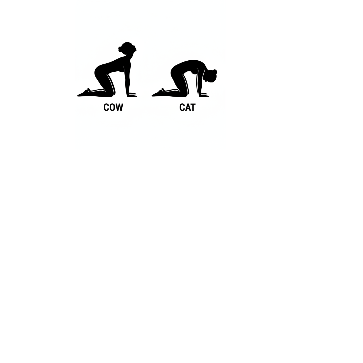
1. Cat-cow stretch
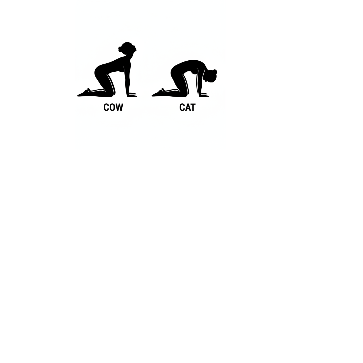
Move slowly and intentionally between arching and rounding your spine.
Cow position (arch): Imagine someone is pulling your belly button down toward the ground with a piece of string. Let your spine arch naturally.
Cat position (round): Tuck your chin to your chest and round your spine completely.
- Duration: 10-15 reps each direction
- Why it matters: Improves spinal mobility and shoulder flexibility
2. Deep hip flexor stretch
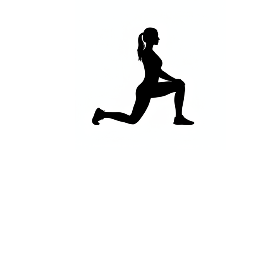
Lunge forward, sinking your hips down to feel a deep stretch in the front of your hip.
- Duration: 30-60 seconds each side
- Why it matters: Hip flexibility is essential for silks and hoop
3. Hamstring stretch
Sit with both legs straight in front of you, hip-width apart. Fold forward from your hips, aiming to reach your feet with your hands.
Important: If you can't reach your feet, that's okay! It's far more important to keep your back straight and legs straight than to force yourself to touch your feet with bent knees or a rounded back. Straight legs + straight back beats touching your toes with poor form.
- Duration: 30-60 seconds
- Why it matters: Hamstring flexibility helps with leg extensions and inversions
4. Shoulder mobility with a band
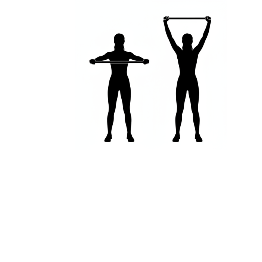
Hold a resistance band or a scarf wide and slowly rotate it over your head and behind your back. If you feel any discomfort, stop and take your hands further apart.
- Sets: 3 x 10 reps
- Why it matters: Opens up shoulder mobility for better grip and control
Full-body conditioning
Circuit training (3 rounds, 45 seconds work / 15 seconds rest):
- Burpees
- Mountain climbers
- Jump squats
- High knees
This builds cardiovascular endurance and functional strength - exactly what you need for back-to-back aerial moves.
Recovery & cool-down
Don't skip this! Stretching after your workout prevents soreness and builds flexibility faster.
5-minute cool-down routine:
- Child's pose (30 seconds)
- Seated forward fold (30 seconds)
- Butterfly stretch (30 seconds)
- Spinal twist (30 seconds each side)
- Neck rolls (10 slow rolls each direction)
Your at-home training schedule
Beginner (2-3x per week):
- 5 min warm-up
- 15 min strength work (pick 3-4 exercises)
- 10 min flexibility work
- 5 min cool-down
Intermediate (3-4x per week):
- 5 min warm-up
- 20 min strength + conditioning circuit
- 10 min flexibility work
- 5 min cool-down
Key takeaways
- Consistency beats intensity - show up regularly, even if it's just 15 minutes
- Strength and flexibility go hand-in-hand; don't skip either
- Listen to your body and progress at YOUR pace
- At-home training complements (not replaces) your aerial classes
- Every rep counts - you're building the foundation for amazing aerial progress
These at-home exercises will prepare your body for aerial arts and accelerate your progress in class. But there's nothing quite like learning from an instructor in person. See you on the mat! 💜